

So, does DentaBiome work?
The strongest evidence-based answer is that DentaBiome has a scientifically plausible product concept, but the supplied sources do not prove the finished product itself produces a specific clinical outcome. Independent research on postbiotics suggests potential effects on oral pathogens, biofilms, inflammatory pathways and periodontal measures, yet those findings come from different postbiotic strains, preparations, delivery formats and study designs.
This distinction matters. A supplement can contain ingredients that belong to an actively researched category without the finished commercial formula having the same level of evidence as the studies used to explain that category. For DentaBiome, the useful question is therefore not simply “does it work?” but “what evidence applies directly to this product, what evidence applies only to its ingredient classes, and what outcome would a reasonable buyer expect?”
What does the independent postbiotic research suggest?
Recent oral-health research describes several mechanisms through which postbiotic preparations may influence the oral environment, including modulation of microbiota, interference with pathogenic biofilms, and effects on inflammatory or antioxidant pathways. These findings provide biological rationale, but they are not interchangeable with proof that one retail supplement will reproduce the same effects.
The supplied 2026 review summarizes laboratory, animal and human research involving postbiotic preparations for periodontal health. It reports that certain inactivated Lactobacillus-derived preparations have been studied for effects on plaque-related organisms, biofilm formation and periodontal measures. For example, one clinical study discussed in the review reported changes in plaque index, bleeding on probing and gingival measures with a specific postbiotic toothpaste. Another small study evaluated heat-killed Lactobacillus plantarum L-137 in people receiving supportive periodontal therapy and reported a greater reduction in probing depth at selected sites by 12 weeks. Those findings are relevant to the category, but the preparations and protocols were not DentaBiome.
The same review also describes in-vitro observations involving oral pathogens such as Fusobacterium nucleatum, Porphyromonas gingivalis and Streptococcus mutans. Laboratory findings can help explain possible mechanisms, yet they sit lower on the evidence ladder than replicated human trials of the exact finished product.
What evidence would directly prove DentaBiome works?
The most persuasive product-level evidence would be well-designed human trials using the exact commercial DentaBiome formula, dose and delivery format, with pre-specified oral-health outcomes and appropriate comparison groups. The supplied materials do not provide that level of finished-product evidence.
| Evidence level | What it can tell us | How it applies to DentaBiome |
|---|---|---|
| Finished-product randomized human trial | Direct evidence about the exact product under defined conditions | Not established in the supplied source set |
| Human study of a similar postbiotic preparation | Shows whether a related preparation may affect measured oral-health outcomes | Useful contextual evidence, but not direct proof |
| Laboratory or animal research | Explores mechanisms, pathogens, biofilms or biological pathways | Supports plausibility, not consumer outcome certainty |
| Ingredient or category review | Maps the broader research landscape and identifies recurring mechanisms | Helps explain rationale and limitations |
| Seller claims and testimonials | Describe positioning or individual experiences | Cannot independently establish efficacy |
How should buyers interpret “oral microbiome support”?
“Oral microbiome support” is a broad concept rather than a single clinical endpoint. Meaningful research may measure plaque indices, gingival measures, pathogen abundance, biofilm formation, salivary markers or shifts in microbial composition, but those outcomes are not equivalent to curing cavities, reversing gum disease or rebuilding damaged teeth.
This is an important guardrail for interpreting DentaBiome. The oral cavity contains a complex microbial ecosystem, and changing one organism or marker does not automatically translate into a noticeable consumer benefit. In addition, the oral environment is strongly influenced by brushing habits, fluoride exposure, diet, saliva, smoking, medications, systemic health and professional dental care. A supplement is only one potential variable in that larger system.
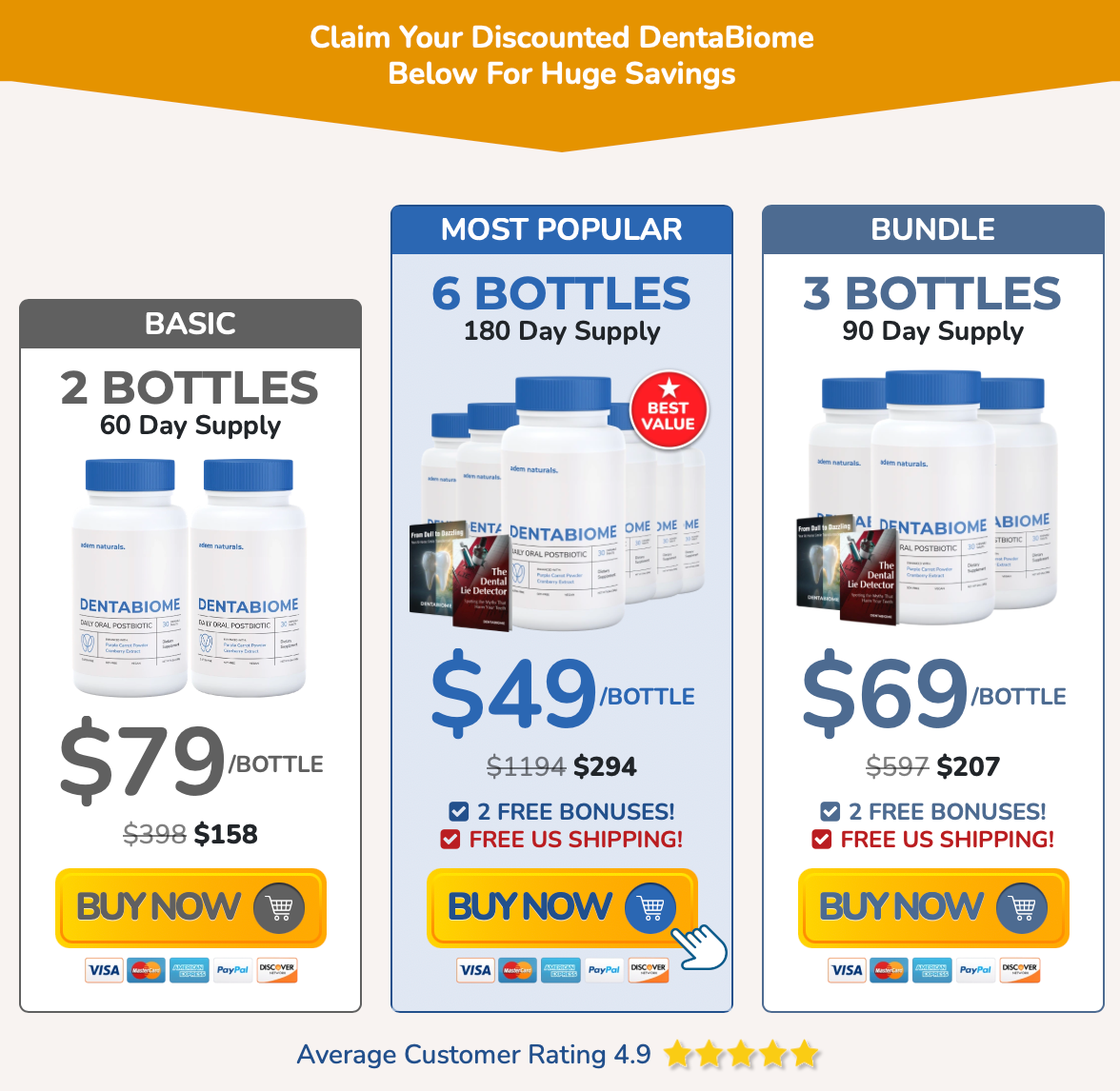
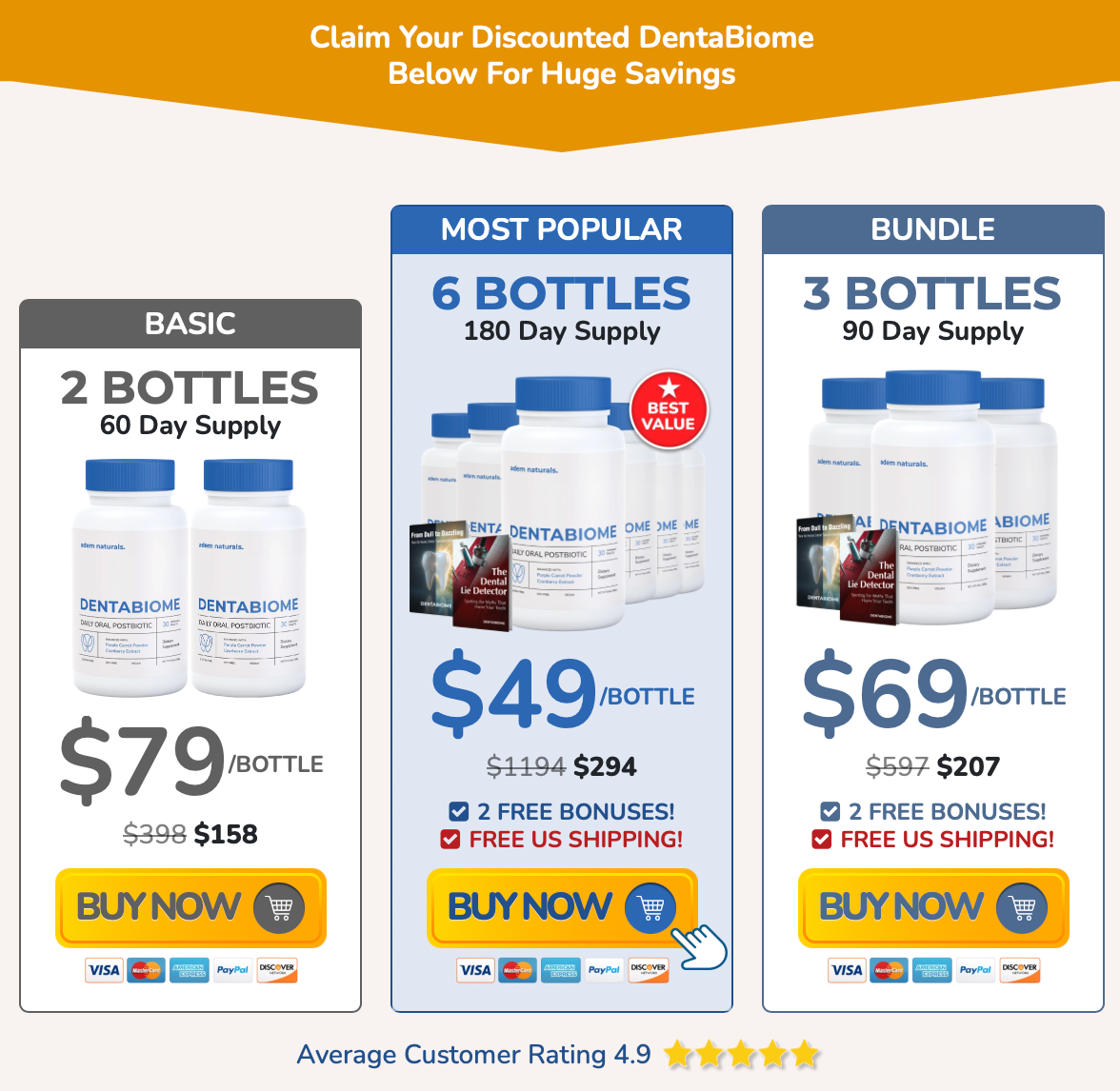
Interested in the DentaBiome Format? Check the Current Product Details
Review the current seller information, package choices and guarantee terms before deciding whether the product fits your oral-care routine.
What outcomes are realistic to expect?
A realistic buyer should treat DentaBiome as an optional oral-care supplement rather than a guaranteed treatment. Any perceived benefit would need to be judged alongside ordinary oral-hygiene practices and over a sensible period, while persistent bleeding, pain, swelling, loose teeth, recurrent sores or other concerning symptoms should be assessed by a dental professional.
Because the supplied materials do not provide a finished-product trial, it would be inappropriate to promise a specific time to results, a guaranteed reduction in plaque, reversal of gum disease, elimination of bad breath, cavity repair or structural tooth restoration. A responsible purchasing decision therefore depends on whether the product format, ingredients, price and evidence limitations are acceptable to you.
Who may find the DentaBiome concept most relevant?
The product may be most relevant to adults who already follow standard oral-hygiene practices and want to experiment with a chewable postbiotic supplement as an adjunct, not a replacement. It may be less suitable for buyers seeking a clinically proven treatment for an existing dental disease or a guaranteed result.
| Buyer situation | Fit assessment | Reason |
|---|---|---|
| Interested in oral microbiome research and a convenient chewable format | Potential fit | The product concept aligns with the broader postbiotic research category |
| Wants an add-on to normal brushing and dental care | Potential fit | An adjunctive mindset matches the limits of the evidence |
| Expects a supplement to repair cavities or replace dental treatment | Poor fit | The supplied evidence does not support that expectation |
| Needs certainty about a specific medical or dental outcome | Poor fit | No finished-product controlled trial in the supplied source set establishes such certainty |
Why can postbiotic studies not simply be transferred to DentaBiome?
Postbiotic effects can depend on the source organism, strain, inactivation method, dose, preparation, delivery route and population studied. A result obtained with a toothpaste, mouthwash, isolated preparation or a specific heat-killed strain cannot automatically be assigned to a different chewable formula.
The supplied review itself describes multiple postbiotic preparation techniques and a range of active components, including non-viable bacteria, cell-wall components and metabolites. That diversity is scientifically useful, but it also explains why category-level evidence must be interpreted carefully. Two products may both be called postbiotic while differing substantially in composition and biological activity.
What would make the evidence for DentaBiome stronger?
Evidence would become materially stronger if the exact finished product were tested in transparent, peer-reviewed human studies with clear endpoints, adequate sample sizes, appropriate controls and full reporting of adverse events. Replication by independent investigators would strengthen confidence further.
Useful product-specific studies could examine standardized plaque and gingival indices, salivary or microbial endpoints, user adherence and safety over a defined period. They should identify the exact formulation and dose so readers can determine whether the tested product matches what is being sold. Until such evidence is available, the most defensible position is cautious optimism about the category rather than certainty about the commercial formula.
How does this page differ from the DentaBiome clinical-evidence page?
This page answers the buyer question “does DentaBiome work?” by translating the evidence into a practical purchasing decision. The dedicated clinical-evidence page will examine study types, endpoints, strengths, limitations and source hierarchy in greater detail without repeating the same buyer-oriented conclusion.
Bottom line: is DentaBiome worth considering?
DentaBiome is reasonable to consider if you value the convenience of a chewable oral-postbiotic supplement and accept that the evidence presently available in the supplied sources is indirect at the finished-product level. The broader science is interesting enough to justify further study, but it does not support presenting DentaBiome as clinically proven to treat or reverse dental disease.
The best purchasing approach is therefore to verify the current formula and seller terms, compare the cost with your expectations, maintain established oral-hygiene practices, and judge the product as an optional adjunct. Buyers with active or persistent dental symptoms should prioritize professional assessment rather than waiting to see whether a supplement changes the problem.
Sources and evidence notes
The independent research basis used for this page includes the supplied review, Postbiotics: A promising frontier in improving periodontal disease, published in Food Nutrition (2026; article 100041; DOI 10.1016/j.fnutr.2025.100041). The paper synthesizes laboratory, animal and clinical work involving postbiotic preparations and also identifies continuing gaps in mechanisms, safety evidence and clinical research. Product identity and commercial positioning are treated separately from independent efficacy evidence.