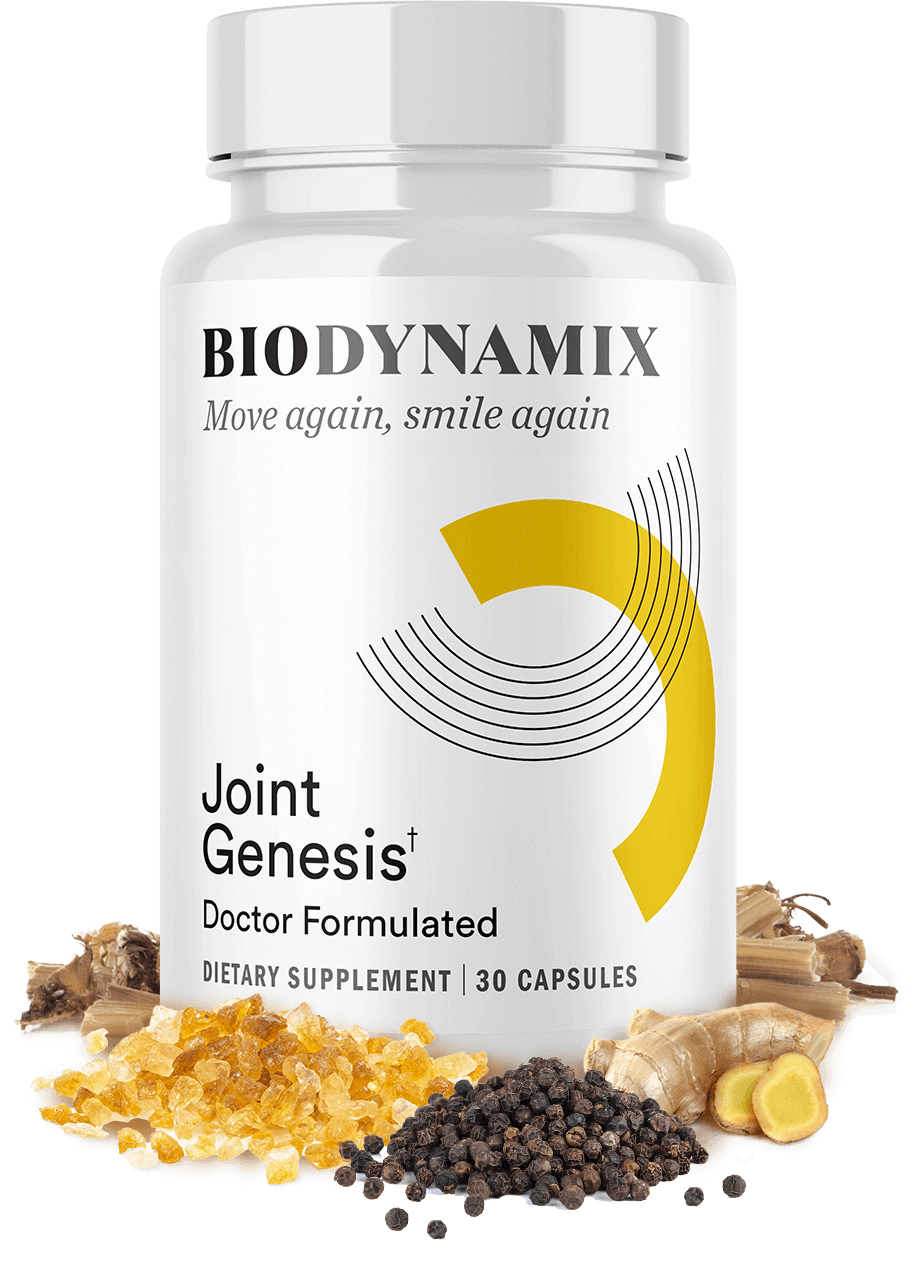
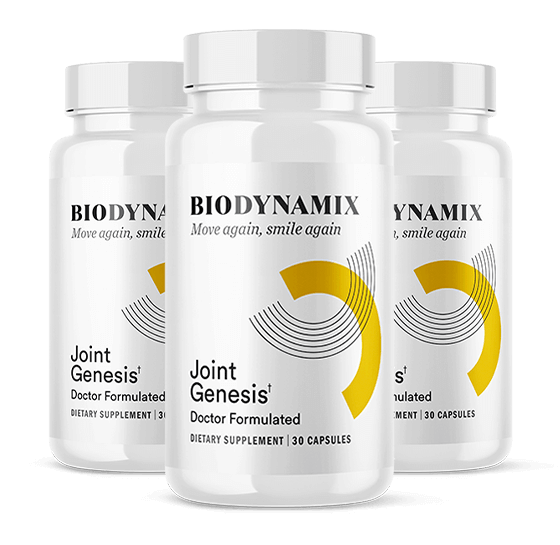
Is Joint Genesis clinically proven as a finished product?
Direct answer: the evidence reviewed for this project does not establish Joint Genesis itself as a clinically proven finished product. The strongest research located is ingredient-level evidence for Mobilee®, ginger and Boswellia, plus contextual research on standardized maritime pine bark extracts and piperine pharmacology.
That does not make the formula evidence-free. It means the evidence must be mapped to the correct entity. A Mobilee trial is evidence about a Mobilee intervention. A ginger meta-analysis is evidence about the preparations included in those trials. Neither is automatically a trial of the finished Joint Genesis capsule.
What does the Mobilee® evidence contribute?
Mobilee provides the closest dose-matched human ingredient evidence. The supplied label lists 80 mg per serving, and a randomized double-blind placebo-controlled study evaluated a Mobilee-containing yogurt at 80 mg/day for 90 days in 40 adults with mild knee discomfort. Some knee-extension muscle-performance outcomes favored the supplemented group, while several functional or quality-of-life measures did not differ.
The study improves confidence that Mobilee is more than a purely theoretical ingredient. Its small sample, food delivery matrix, selected population and mixed outcomes are reasons to avoid turning it into broad claims about pain relief or finished-product efficacy.
What does the ginger meta-analysis show?
A 2015 meta-analysis of five randomized placebo-controlled trials involving 593 adults with osteoarthritis reported statistically significant but modest average reductions in pain and disability with oral ginger. It also found greater withdrawal due to adverse events in ginger groups. The authors judged the evidence moderate in quality.
This is meaningful independent evidence for ginger as an ingredient category. It does not demonstrate that the 200 mg ginger powder in Joint Genesis reproduces those pooled results.
What does the Boswellia evidence show?
Recent Boswellia evidence is promising but not uniformly positive. A 2024 systematic review and meta-analysis reported substantial heterogeneity and did not find statistically significant effects in some overall pooled WOMAC and VAS comparisons. Placebo subgroup analyses were more favorable, and the authors called for further high-quality trials.
That nuance supports a positive-neutral statement: Boswellia has human evidence relevant to joint symptoms, but every extract and dose should not be treated as equivalent.
Why is the pine bark evidence more indirect?
The Joint Genesis label identifies 150 mg of Pinus pinaster pine bark extract but does not identify Pycnogenol®. Research on Pycnogenol belongs in contextual evidence rather than a direct product claim.
One randomized study found metabolites of Pycnogenol in synovial fluid after 200 mg/day for three weeks in people awaiting knee arthroplasty. That is scientifically interesting, but the branded extract, dose and population do not closely match the Joint Genesis label.
What evidence would strengthen the Joint Genesis case?
- an independently conducted randomized trial of the finished formula;
- clear registration and prespecified outcomes;
- adequate sample size;
- transparent adverse-event reporting;
- publication of null as well as positive outcomes;
- replication by investigators without product-related commercial relationships.
Until then, the credible sales-copy position is that Joint Genesis has a differentiated formula with human research relevant to several ingredients—not that the finished product is independently proven to deliver a specific physiological outcome.