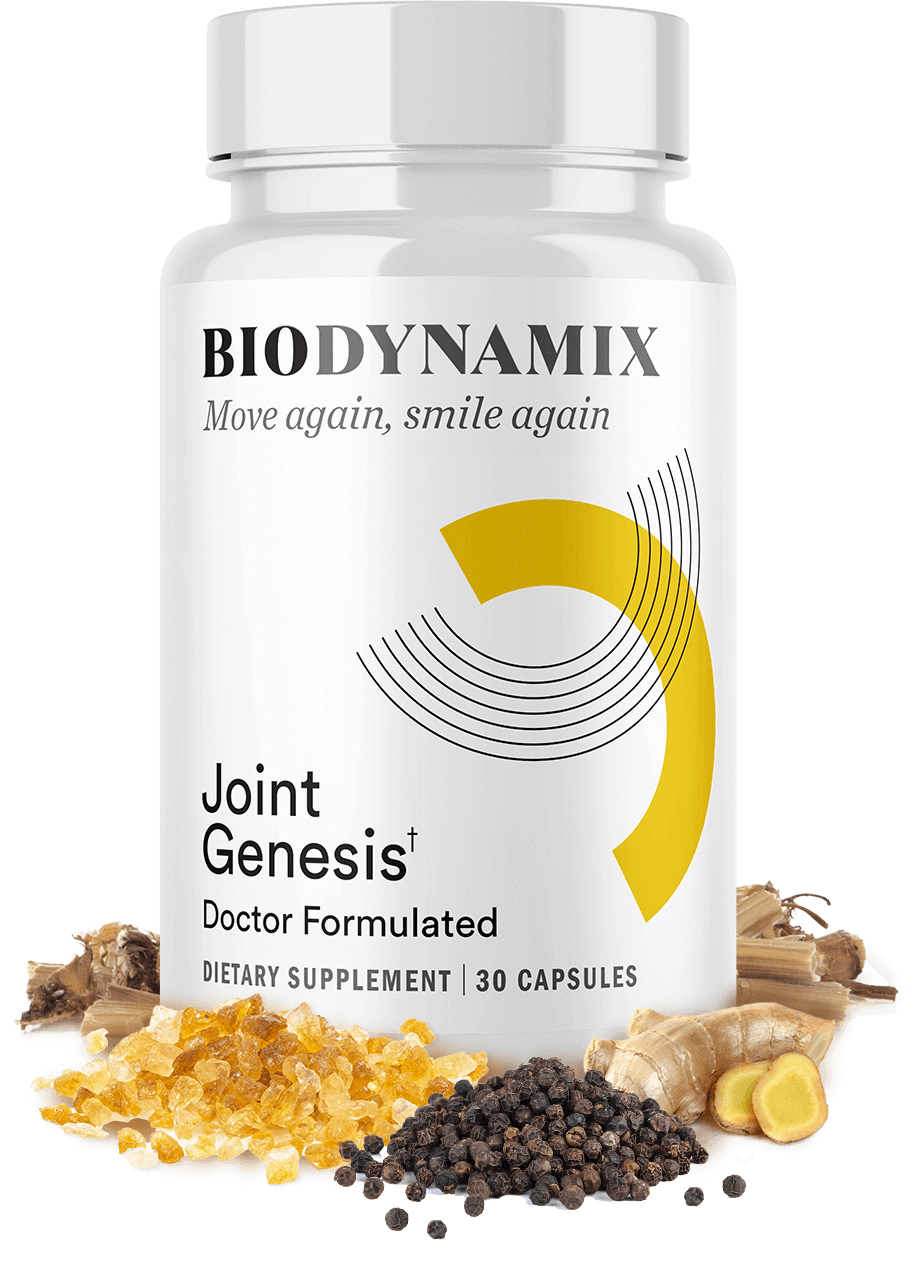
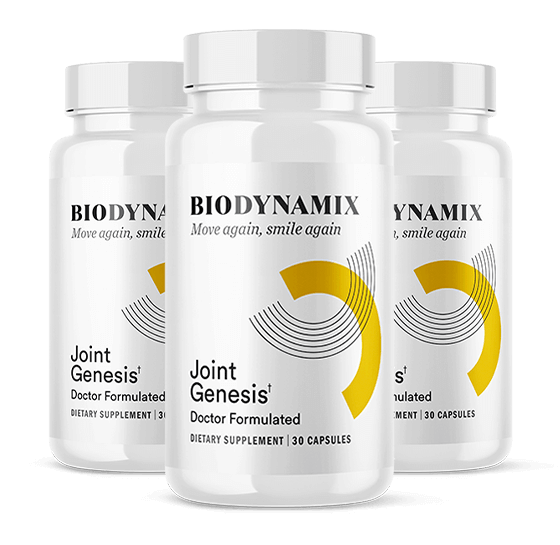
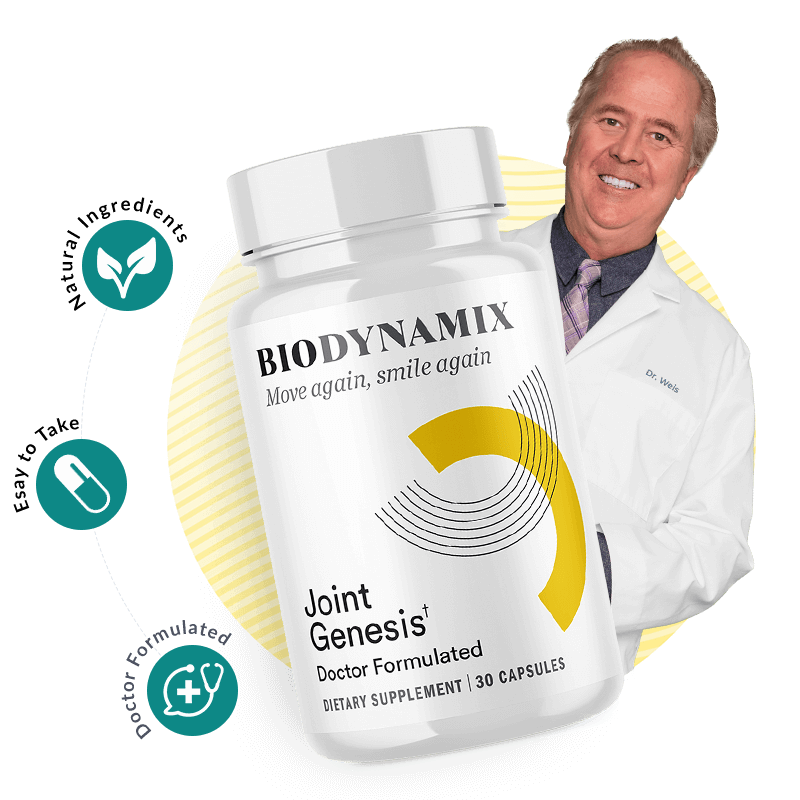
Does Joint Genesis work?
Direct answer: Joint Genesis has a plausible, evidence-connected formula, but the sources reviewed do not establish that the finished product reliably produces a specific result for every user. The most defensible buying conclusion is that it is reasonable to consider if its Mobilee-centered formulation matches the buyer's goals and the evidence limits are acceptable.
“Does it work?” can hide several different questions. Does Mobilee have human research? Yes. Does ginger have randomized-trial evidence? Yes. Does Boswellia have clinical literature? Yes. Does that automatically prove the exact multi-ingredient Joint Genesis capsule produces guaranteed pain or mobility outcomes? No.
Why doesn't ingredient evidence settle the question?
Clinical effects belong to the intervention actually tested. A study of 80 mg Mobilee in yogurt tells us something about that intervention. A meta-analysis of ginger trials tells us something about the preparations in those trials. Joint Genesis combines several ingredients in a capsule with its own dose pattern.
Evidence transfer is strongest when ingredient identity, dose, route, duration and target population closely match. It weakens as those factors diverge. This is why the page treats Joint Genesis as evidence-connected without presenting it as clinically proven.
See the detailed evidence ladder →
What result should a realistic buyer expect?
A realistic expectation is support-oriented, not guaranteed. Someone may consider Joint Genesis because they want a differentiated joint-support formula and are interested in maintaining comfortable everyday movement. The product should not be positioned as a substitute for diagnosis, medication, rehabilitation or other care when those are needed.
Variation is unavoidable. Age, underlying joint pathology, activity, body weight, concurrent medicines and adherence can affect what a person experiences. Testimonials cannot resolve that uncertainty.
How should price affect the decision?
Price does not change biological evidence, but it changes the value proposition. A product with ingredient-level rather than finished-product evidence may still be worth considering if the formula is distinctive, the buyer accepts uncertainty, the price is reasonable relative to alternatives and the guarantee meaningfully reduces purchase risk.
An attractive discount does not strengthen clinical evidence. Current price and package information therefore belongs in the transactional layer, not in the evidence conclusion.
Joint Genesis price and value analysis →
Bottom line: is Joint Genesis worth trying?
For the right buyer, Joint Genesis is reasonable to consider; it is not reasonable to portray it as guaranteed. The 80 mg Mobilee dose plus ginger and standardized Boswellia gives the formula a credible research connection. Its main weakness is the gap between ingredient evidence and finished-product evidence.
That balance supports positive-neutral copy: differentiated formula, real ingredient research, realistic expectations, safety review and current commercial verification.