Hearing Support Supplements: What the Evidence Can and Cannot Tell You
Hearing-support supplements are marketed around nutrients, antioxidants, circulation, stress biology and auditory wellness, but evidence differs sharply by ingredient, population and outcome. The most useful way to compare them is to separate nutrition research from finished-product proof and to keep proven hearing-protection steps in view.
Affiliate disclosure: GetGlobalOffers may earn a commission if you purchase through the Audifort offer links on this page. Research conclusions are written independently of commission.
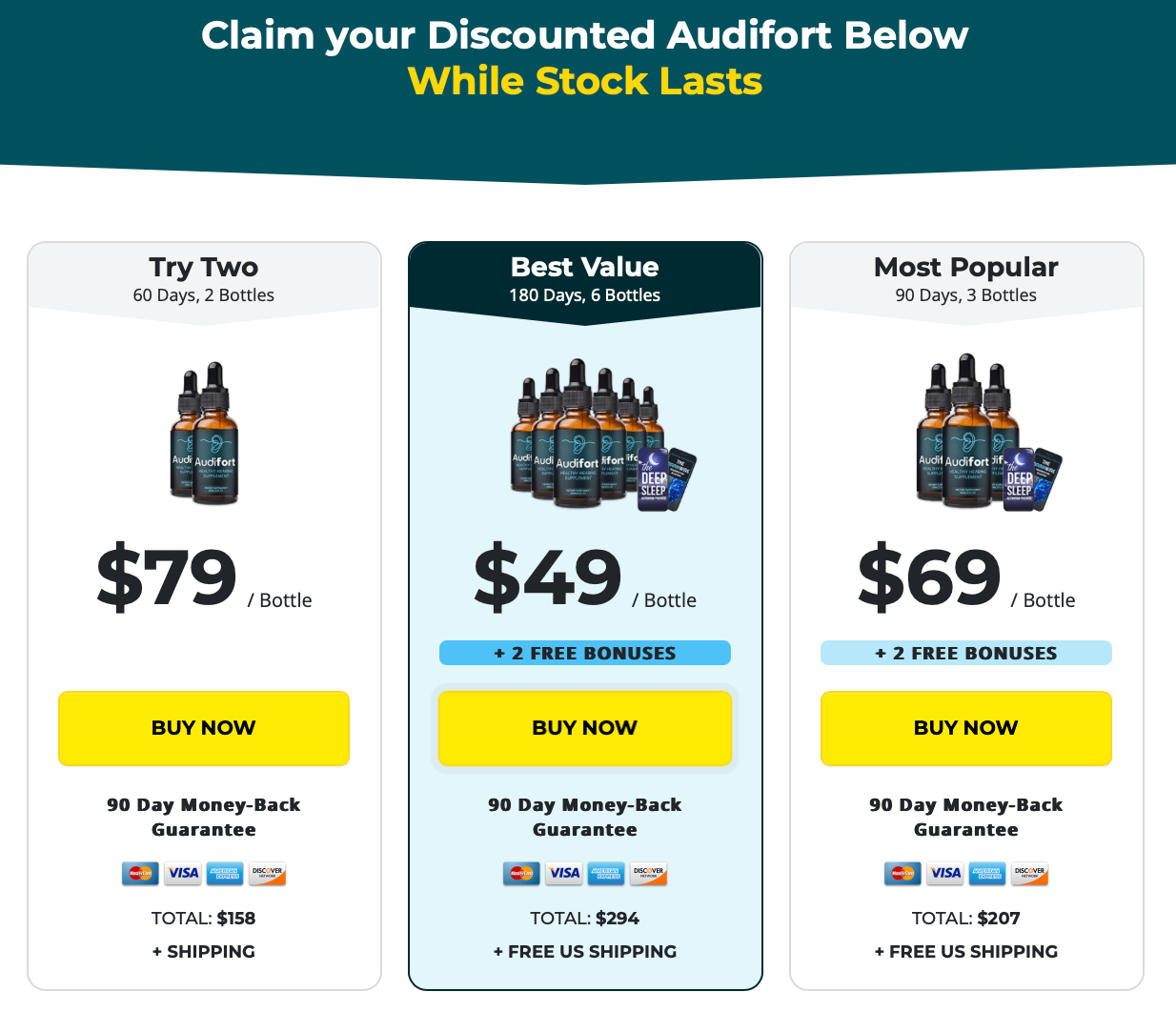
BUY PRODUCT: See the Current Audifort Offer
Audifort is one commercial hearing-support option. Review the research guide first, then verify the live package, shipping and guarantee terms before buying.
Research guide at a glance
- What are hearing-support supplements, and what problem are buyers trying to solve?
- What does current nutrition research suggest about hearing?
- Which ingredient categories deserve the closest look?
- What matters more than supplements for hearing protection?
- How should you compare hearing-support products?
What are hearing-support supplements, and what problem are buyers trying to solve?
Hearing-support supplements are dietary products promoted for general auditory wellness, age-related hearing concerns, tinnitus-related interest or protection from oxidative stress. Their formulas often combine vitamins, minerals, plant extracts and amino-acid-related compounds. The commercial category is broad, so two products that share a “hearing support” label may have very different formulas and evidence profiles.
The core buyer problem is usually not “which bottle has the longest ingredient list?” It is whether a product contains ingredients with credible human evidence for the buyer's actual goal, whether the dose and form resemble the research, and whether there are safety or interaction concerns. A supplement can be commercially legitimate while still having uncertain clinical benefit.
What does current nutrition research suggest about hearing?
A 2025 systematic review and meta-analysis of 33 observational studies found inverse associations between hearing loss and several dietary factors, including vitamin B2, beta-carotene, carotenoids, beta-cryptoxanthin, fiber and fish intake. That supports the idea that diet and nutrient status may relate to auditory health, but most of the included evidence was observational. Observational associations cannot establish that taking a specific supplement prevents or reverses hearing loss.
Earlier NHANES research in 2,592 US adults found higher intakes of beta-carotene, vitamin C and magnesium were associated with better hearing thresholds. A prospective study in men likewise explored vitamin intake and hearing-loss risk. These studies are useful for biological plausibility and hypothesis generation, but they do not validate any branded hearing-support formula.
Which ingredient categories deserve the closest look?
Nutrients and antioxidant-related ingredients deserve different levels of confidence. Human studies have examined vitamins, magnesium, folate, vitamin B12 and N-acetylcysteine in particular contexts. A systematic review of occupational noise-induced hearing loss reported potentially protective findings for vitamin B12, folic acid and NAC, while results for vitamins A, C and E were inconsistent.
A buyer should therefore ask five questions: Was the ingredient studied in humans? Was the endpoint hearing threshold, tinnitus severity or something else? Was the dose comparable? Was the study preventive, therapeutic or observational? And is the branded product itself supported by a trial? Those questions prevent a common marketing error, where evidence about one nutrient is presented as if it proves a multi-ingredient product works.
What matters more than supplements for hearing protection?
For noise-induced hearing loss, prevention has stronger practical support than supplementation. CDC guidance emphasizes reducing volume, moving away from loud sound, taking breaks and using appropriate hearing protection when noise cannot be avoided. These measures directly address a known cause of hearing damage.
A supplement should not replace hearing protection, audiologic testing or medical evaluation. Sudden hearing loss, one-sided symptoms, ear pain, drainage, severe dizziness or new persistent tinnitus are reasons to seek qualified assessment rather than relying on an over-the-counter product.
How should you compare hearing-support products?
Compare products on formula transparency, evidence quality, dose clarity, safety, seller identity, return terms and the distinction between general wellness language and disease-treatment claims. Products that imply guaranteed restoration of hearing, “cure” tinnitus, or claim FDA approval as dietary supplements should trigger caution.
Audifort is one commercial option in this category. Its role on this guide is illustrative rather than proof of category efficacy: buyers can inspect its multi-ingredient liquid format and current offer, then read the dedicated Audifort review for product-specific facts and evidence limits.
How should evidence quality change your buying confidence?
Evidence should be weighted by study design, relevance and reproducibility rather than by the number of citations on a sales page. A randomized trial of the exact finished product is more directly useful for a product claim than an observational study of dietary intake. A systematic review can strengthen confidence when the included studies are reasonably consistent, but it can also reveal that results differ by population, dose or outcome. Mechanistic laboratory findings are valuable for understanding how an ingredient might work, yet they sit several steps away from a real-world clinical effect.
For hearing-support supplements, the endpoint matters as much as the design. Hearing threshold, speech-in-noise performance, tinnitus distress, subjective sound quality and general wellbeing are different outcomes. A study showing an association with hearing thresholds should not be rewritten as proof of tinnitus relief. Likewise, a study in occupational noise exposure may not apply to age-related hearing loss. Good buyer research keeps those boundaries visible.
A practical five-part evidence ladder
First, identify whether the finished product has human trials. Second, check whether the population resembles the intended buyer. Third, compare the dose and formulation used in research with the marketed product. Fourth, examine whether the measured endpoint matches the advertising claim. Fifth, look for replication or higher-level synthesis rather than relying on one favorable study. If several steps are missing, the correct conclusion is uncertainty, not automatic rejection and not automatic endorsement.
This approach also helps compare value. A lower-priced product with transparent dosing and modest claims may be easier to assess than a more expensive formula built around a large proprietary blend. Conversely, a product can have clear commercial terms and still have limited efficacy evidence. Seller legitimacy and clinical effectiveness are separate questions, and both deserve independent checks.
Decision framework: what deserves the most weight?
| Question | Higher-confidence signal | Lower-confidence signal |
|---|---|---|
| Does an ingredient relate to hearing biology? | Human studies with relevant auditory outcomes | Mechanism-only or animal evidence |
| Does a branded product work? | Trials of the finished product at the marketed dose | Evidence borrowed from one ingredient |
| Is a product safe for you? | Formula-specific safety data plus clinician/pharmacist review when needed | “Natural means safe” marketing |
| Is the offer legitimate? | Identifiable seller, secure checkout, clear terms and refund policy | Unverifiable ratings, urgency or marketplace listings |
| What protects hearing from loud noise? | Lower exposure and appropriate hearing protection | Using a supplement while exposure continues |
BUY PRODUCT: Compare the Research With the Current Offer
Audifort can be evaluated as a multi-ingredient liquid supplement with a current merchant offer. The research above should guide expectations; the commercial link should not replace medical or audiological care.
View Current Audifort OfferRelated hearing-health guides and Audifort research
Hearing Support Supplements Vitamins and Hearing Health Antioxidants and Hearing Health Magnesium and Hearing Health Tinnitus Supplements How to Compare Hearing Support Supplements Without Falling for Weak Evidence
Audifort Review · Audifort Ingredients · Does Audifort Work? · Audifort Side Effects · Audifort and Tinnitus · Audifort Alternatives
BUY PRODUCT: Ready to Check Audifort Packages?
Use the official affiliate destination below and recheck the live price, shipping and refund terms before completing any order.
Check Audifort PackagesAffiliate link. Offer terms can change.
Sources and verification notes
- Protective effects of dietary nutrients on hearing loss: a systematic review and meta-analysis.
- Antioxidant vitamins and magnesium and the risk of hearing loss in the US general population.
- A prospective study of vitamin intake and the risk of hearing loss in men.
- Protective effects of vitamins/antioxidants on occupational noise-induced hearing loss: a systematic review.
- CDC: Preventing Noise-Induced Hearing Loss.
- American Hearing + Audiology: The Sound of Wellness: Supplements for Hearing Health.
- Audifort merchant and affiliate-resource archives supplied with this project, used only for product identity, package, offer, guarantee and seller-route facts.
Health disclaimer: This guide is educational and is not medical advice. Dietary supplements are not substitutes for diagnosis or treatment. Seek qualified care for sudden hearing loss, persistent or one-sided tinnitus, severe dizziness, ear pain, neurologic symptoms or other concerning changes.