Gut Microbiome and Eye Health: What Current Research Is Investigating
Researchers are examining whether intestinal microbes, immune signaling and microbial metabolites can influence ocular tissues. This guide separates the main research themes from stronger claims and explains how the topic fits into a careful VisiFlora review.
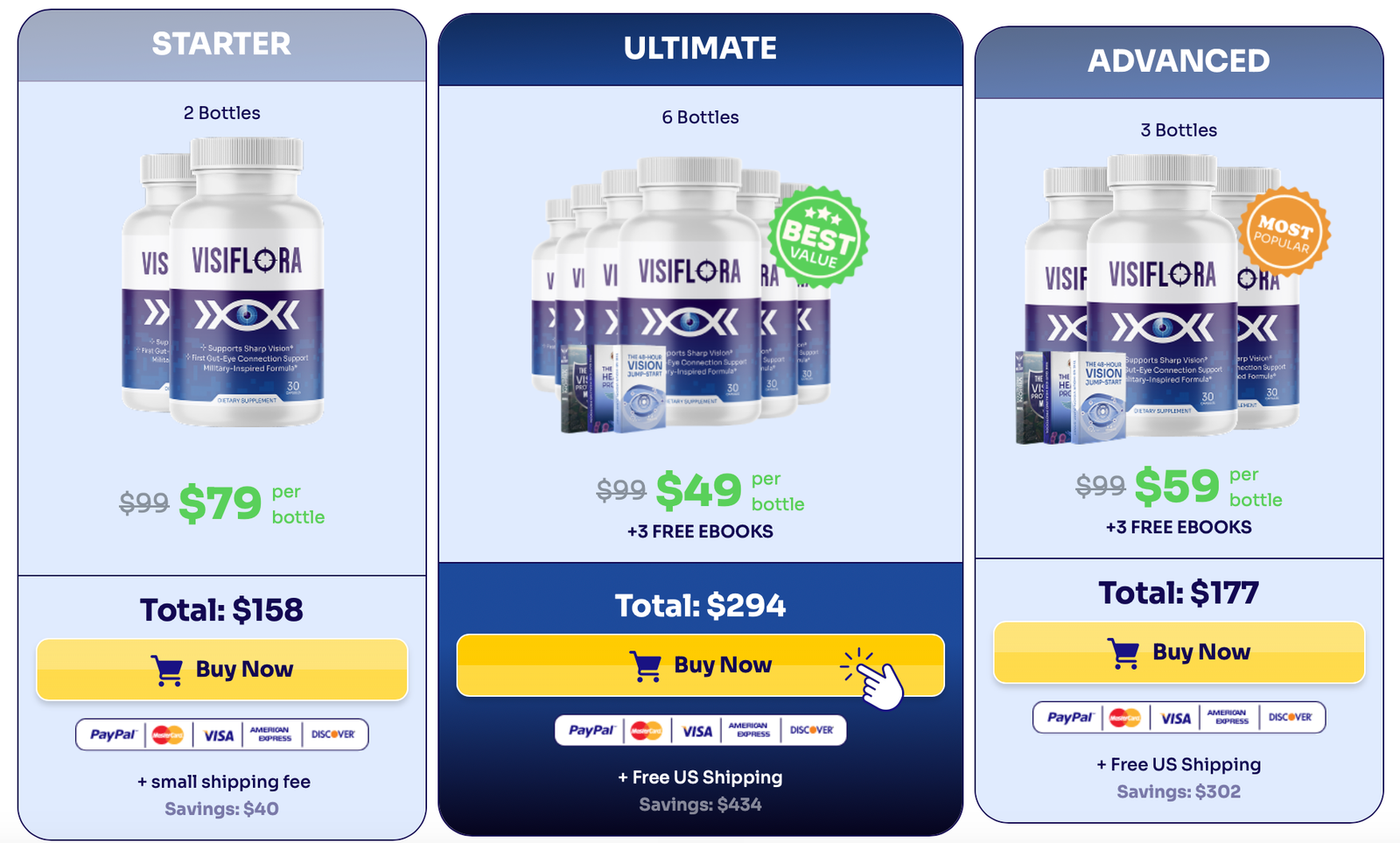
Check the Current Offer Before You Decide
Package prices, shipping and bonuses can change. Confirm current terms on the merchant page.
Published Products
Explore current product reviews and research hubs.


Direct Answer: How Could the Gut Microbiome Relate to Eye Health
The gut microbiome may influence eye-related biology through immune regulation, microbial metabolites, intestinal-barrier integrity and systemic metabolic signaling. The uploaded reviews repeatedly emphasize that the most consistent signals are functional, not simply the presence or absence of one bacterial species.
This matters because the gut and the eye are physically distant organs. Any credible gut-eye model therefore needs an intermediary pathway. Current research focuses on circulating metabolites, immune-cell programming, inflammatory mediators and barrier systems rather than a simplistic idea that intestinal bacteria directly travel to the retina.
The American Academy of Ophthalmology overview likewise describes the microbiome as a possible contributor to systemic immune activity while stressing that links differ across uveitis, age-related macular degeneration, dry eye and glaucoma. For buyers, the useful question is not whether the microbiome is “good” or “bad,” but whether a proposed product has ingredients and evidence that plausibly relate to a specific pathway.
Functional Signals May Matter More Than Individual Bacteria
Recent gut-eye reviews suggest that recurring functions such as short-chain-fatty-acid production, immune programming and barrier maintenance may be more reproducible than disease-specific bacterial signatures.
Microbiome composition varies across geography, diet, age, medication exposure and sequencing method. That makes species-level claims fragile. A functional approach asks what the microbial community is doing: producing metabolites, interacting with immune cells, supporting epithelial barriers or altering inflammatory tone.
This distinction is especially useful when reading supplement marketing. A product does not become clinically validated merely because one ingredient is associated with a microbiome pathway. Buyers should look for product-specific evidence, transparent formula information and realistic language about what remains uncertain.
Immune Regulation Is a Central Gut-Eye Theme
Th17/Treg balance and related immune pathways appear repeatedly in the uploaded ophthalmic literature, especially in experimental uveitis research.
Regulatory T cells help restrain inappropriate immune responses, while Th17 and other effector cells can participate in inflammation. The AAO article describes animal studies in which microbiome changes and short-chain fatty acids influenced these cell populations and the severity of experimental autoimmune uveitis.
These findings help explain why scientists take the gut-eye axis seriously, but they are not equivalent to human treatment evidence. A mechanistic pathway can be biologically plausible long before researchers know whether changing that pathway improves a clinical outcome.
What Buyers Should Verify in a Gut-Eye Supplement
A useful buyer checklist focuses on formula transparency, ingredient amounts, safety, current merchant terms and the difference between ingredient research and product-level evidence.
First, confirm the current Supplement Facts panel rather than relying on a promotional summary. Second, check whether ingredient forms and amounts are disclosed. Third, separate ingredients intended for general nutritional eye support from ingredients marketed around digestive or microbiome concepts. Fourth, consider interaction and tolerability issues, particularly if you use prescription medicines or manage an eye or metabolic condition.
VisiFlora can be evaluated within this framework without turning emerging gut-eye science into a promise. The product page and ingredient guide should be read alongside the independent research pages in this series.
Compare the Research With the Current VisiFlora Offer
Review the formula, package options and merchant terms before ordering.
How to Interpret This Research Before Making a Buying Decision
When interpreting gut microbiome and eye health, it helps to move from mechanism to evidence rather than from marketing to conclusion. Consider microbial composition, function, metabolites, diet, medications and host factors rather than treating one bacterial taxon as a universal marker. This keeps plausible biology, ingredient-level research and finished-product evidence in separate categories.
Microbiome and nutrition studies are especially sensitive to context. Diet, age, medication use, geography, metabolic health, sequencing methods and baseline microbial composition can all affect results. A finding in one population may therefore be useful for hypothesis generation without being directly transferable to every consumer or to a multi-ingredient supplement.
For VisiFlora, the practical task is to compare the verified label and merchant information with the scope of the independent research. Where evidence addresses an individual nutrient or biological pathway, the page should say so. Where research addresses a disease population, a different dose or another formulation, those differences should remain visible rather than being collapsed into a single product claim.
Evidence questions to ask
- Was the evidence obtained in humans, animals, laboratory models or observational datasets?
- Does it study the finished VisiFlora formula, a single ingredient, a dietary pattern or only a proposed biological pathway?
- Are dose, formulation, population and measured endpoint comparable with the buying question on this page?
- Are findings replicated by independent groups, or are they exploratory and dependent on one dataset?
Buyer questions to ask
- Does the current label clearly identify the ingredients and directions needed to evaluate fit?
- Are merchant facts such as package size, shipping and refund terms current at checkout?
- Could medicines, allergies, pregnancy, a diagnosed eye condition or other health factors change the safety decision?
- Would a qualified eye-care or medical professional be more appropriate for the underlying concern?
From Research Signal to Consumer Decision
The research topic covered on this page becomes useful to a consumer only after several translation steps are checked: the biological mechanism, the quality of human evidence, the relevance of the studied dose or exposure, and whether the finished VisiFlora formula has been evaluated in the same context.
Mechanistic evidence can explain why researchers study a pathway. Observational evidence can show that a characteristic is associated with an outcome. Randomized human trials are more useful for estimating whether an intervention changes a defined endpoint. These evidence types are complementary, but they are not interchangeable. A strong page should therefore avoid collapsing all of them into one confidence level.
For gut-eye topics, interpretation also needs to account for the complexity of the microbiome. Microbial communities change with diet, age, medication exposure, geography and disease status. Even when studies report similar functional themes, such as inflammatory signaling or microbial metabolites, the specific organisms and measured biomarkers may differ. Reproducibility across methods and populations is therefore an important part of the evidence picture.
For VisiFlora, the buyer-facing conclusion should remain product-specific and practical: review the current label, compare the stated formula with the scope of the independent evidence, check safety considerations, and confirm current merchant terms. That process produces a better decision than assuming that an interesting pathway automatically predicts a finished-product outcome.
Research Sources
Ready to Review the Current VisiFlora Offer?
Confirm the current label, package, shipping and guarantee directly with the merchant.