Short-Chain Fatty Acids and Eye Health: Butyrate, Immune Signaling and Gut-Eye Research
Short-chain fatty acids such as acetate, propionate and butyrate are among the clearest mechanistic themes in gut-eye research. This guide explains why they matter, what animal studies show and what remains uncertain for human eye health.
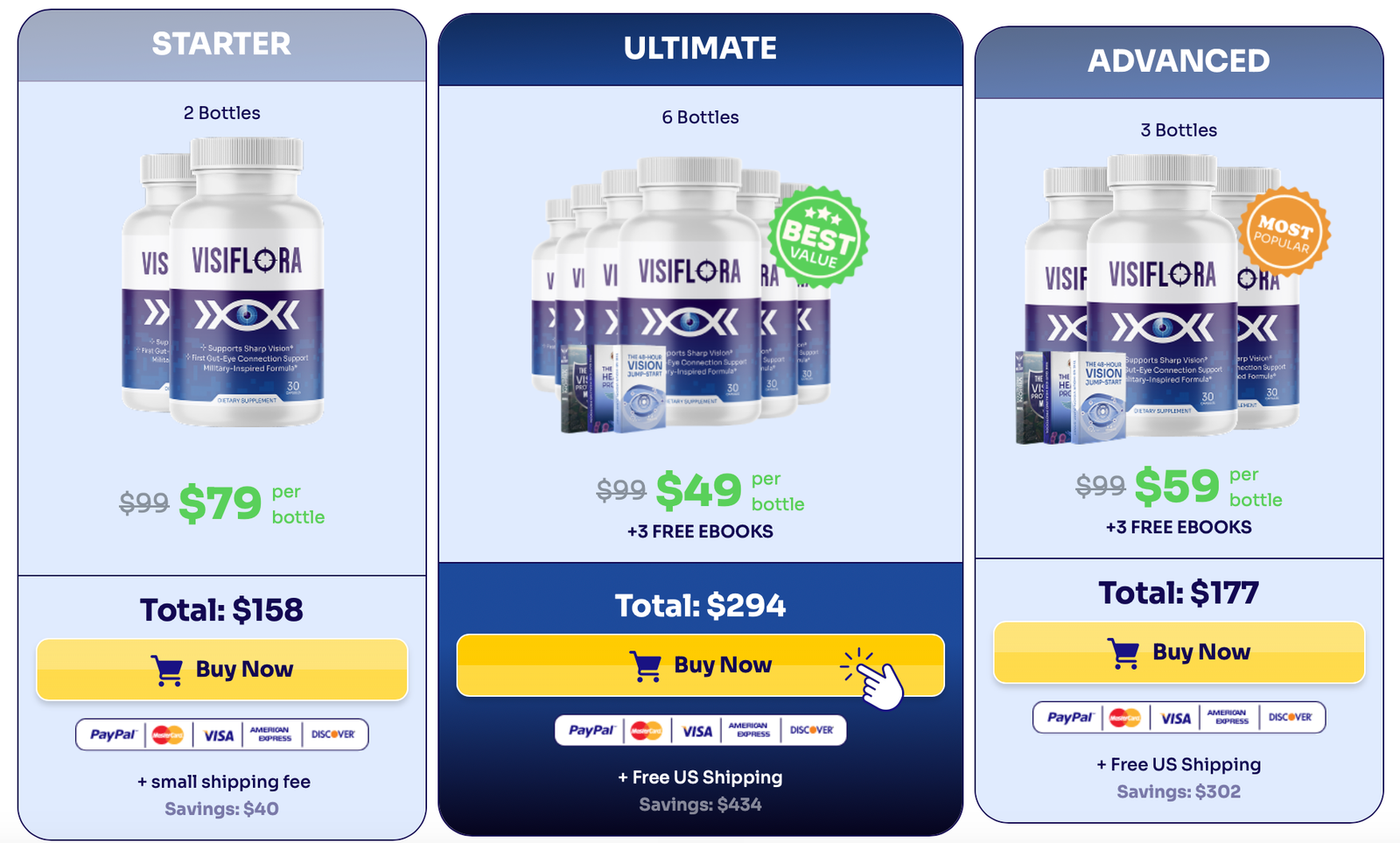
Check the Current Offer Before You Decide
Package prices, shipping and bonuses can change. Confirm current terms on the merchant page.
Published Products
Explore current product reviews and research hubs.




Direct Answer: What Are Short-Chain Fatty Acids
Short-chain fatty acids are microbial metabolites produced largely when gut bacteria ferment dietary fiber. Acetate, propionate and butyrate are the most commonly discussed SCFAs in gut-eye research.
SCFAs have well-described roles in intestinal biology. Butyrate is an important fuel for colonocytes, while SCFAs can influence epithelial-barrier integrity and immune-cell behavior. These functions make them plausible messengers between gut activity and distant tissues.
In the ophthalmic literature supplied for this project, SCFAs appear repeatedly because they may help explain how the microbiome can affect systemic inflammation without requiring bacteria to reach the eye.
Why Butyrate Receives Particular Attention
Butyrate attracts attention because it supports the intestinal epithelium and can promote regulatory immune responses in experimental systems.
The uploaded narrative review describes butyrate as both an energy source for colonocytes and an immune-active metabolite. It also discusses the broader anti-inflammatory tendency of SCFAs through support of regulatory T-cell activity.
These functions are relevant to the gut-eye axis, but they do not establish that higher butyrate automatically produces better vision. Human physiology is more complicated, and circulating concentrations, receptor effects, diet, medications and disease context all matter.
What the AAO Uveitis Research Example Shows
The American Academy of Ophthalmology article describes mouse studies in which short-chain fatty acids reduced experimental autoimmune uveitis severity while affecting regulatory T cells and effector-cell migration.
This is an important mechanistic example because it connects microbial metabolites with an ocular inflammatory model. It also shows why evidence classification matters. The findings come from experimental animal models, so they support biological plausibility rather than a direct consumer claim about preventing or treating human uveitis.
For buyer education, this distinction is essential. Animal studies can help explain why researchers pursue a pathway, but clinical usefulness requires appropriately designed human research.
How Diet Fits Into SCFA Production
Dietary fiber is a major substrate for microbial fermentation, so diet can influence SCFA production and microbiome function.
Different fibers are fermented by different microbial communities, and dietary patterns can alter the ecological conditions within the gut. This is one reason diet appears frequently alongside microbiome research.
A supplement positioned around the gut-eye axis should not replace basic dietary considerations. Buyers should view SCFA science as one mechanistic piece of a larger nutrition, metabolic-health and eye-health picture.
Compare the Research With the Current VisiFlora Offer
Review the formula, package options and merchant terms before ordering.
How to Interpret This Research Before Making a Buying Decision
When interpreting short-chain fatty acids and eye health, it helps to move from mechanism to evidence rather than from marketing to conclusion. Interpret scfa research in the context of fiber fermentation, immune regulation, intestinal barrier function and the difference between systemic biomarkers and ocular outcomes. This keeps plausible biology, ingredient-level research and finished-product evidence in separate categories.
Microbiome and nutrition studies are especially sensitive to context. Diet, age, medication use, geography, metabolic health, sequencing methods and baseline microbial composition can all affect results. A finding in one population may therefore be useful for hypothesis generation without being directly transferable to every consumer or to a multi-ingredient supplement.
For VisiFlora, the practical task is to compare the verified label and merchant information with the scope of the independent research. Where evidence addresses an individual nutrient or biological pathway, the page should say so. Where research addresses a disease population, a different dose or another formulation, those differences should remain visible rather than being collapsed into a single product claim.
Evidence questions to ask
- Was the evidence obtained in humans, animals, laboratory models or observational datasets?
- Does it study the finished VisiFlora formula, a single ingredient, a dietary pattern or only a proposed biological pathway?
- Are dose, formulation, population and measured endpoint comparable with the buying question on this page?
- Are findings replicated by independent groups, or are they exploratory and dependent on one dataset?
Buyer questions to ask
- Does the current label clearly identify the ingredients and directions needed to evaluate fit?
- Are merchant facts such as package size, shipping and refund terms current at checkout?
- Could medicines, allergies, pregnancy, a diagnosed eye condition or other health factors change the safety decision?
- Would a qualified eye-care or medical professional be more appropriate for the underlying concern?
From Research Signal to Consumer Decision
The research topic covered on this page becomes useful to a consumer only after several translation steps are checked: the biological mechanism, the quality of human evidence, the relevance of the studied dose or exposure, and whether the finished VisiFlora formula has been evaluated in the same context.
Mechanistic evidence can explain why researchers study a pathway. Observational evidence can show that a characteristic is associated with an outcome. Randomized human trials are more useful for estimating whether an intervention changes a defined endpoint. These evidence types are complementary, but they are not interchangeable. A strong page should therefore avoid collapsing all of them into one confidence level.
For gut-eye topics, interpretation also needs to account for the complexity of the microbiome. Microbial communities change with diet, age, medication exposure, geography and disease status. Even when studies report similar functional themes, such as inflammatory signaling or microbial metabolites, the specific organisms and measured biomarkers may differ. Reproducibility across methods and populations is therefore an important part of the evidence picture.
For VisiFlora, the buyer-facing conclusion should remain product-specific and practical: review the current label, compare the stated formula with the scope of the independent evidence, check safety considerations, and confirm current merchant terms. That process produces a better decision than assuming that an interesting pathway automatically predicts a finished-product outcome.
Research Sources
Ready to Review the Current VisiFlora Offer?
Confirm the current label, package, shipping and guarantee directly with the merchant.