How VisiFlora Is Designed to Work: Gut-Eye, Antioxidant and Nutritional Pathways
VisiFlora is marketed around a combination of eye-support nutrients, antioxidant-oriented ingredients and the emerging gut-eye concept. Understanding that positioning requires separating biological mechanisms from demonstrated product outcomes.
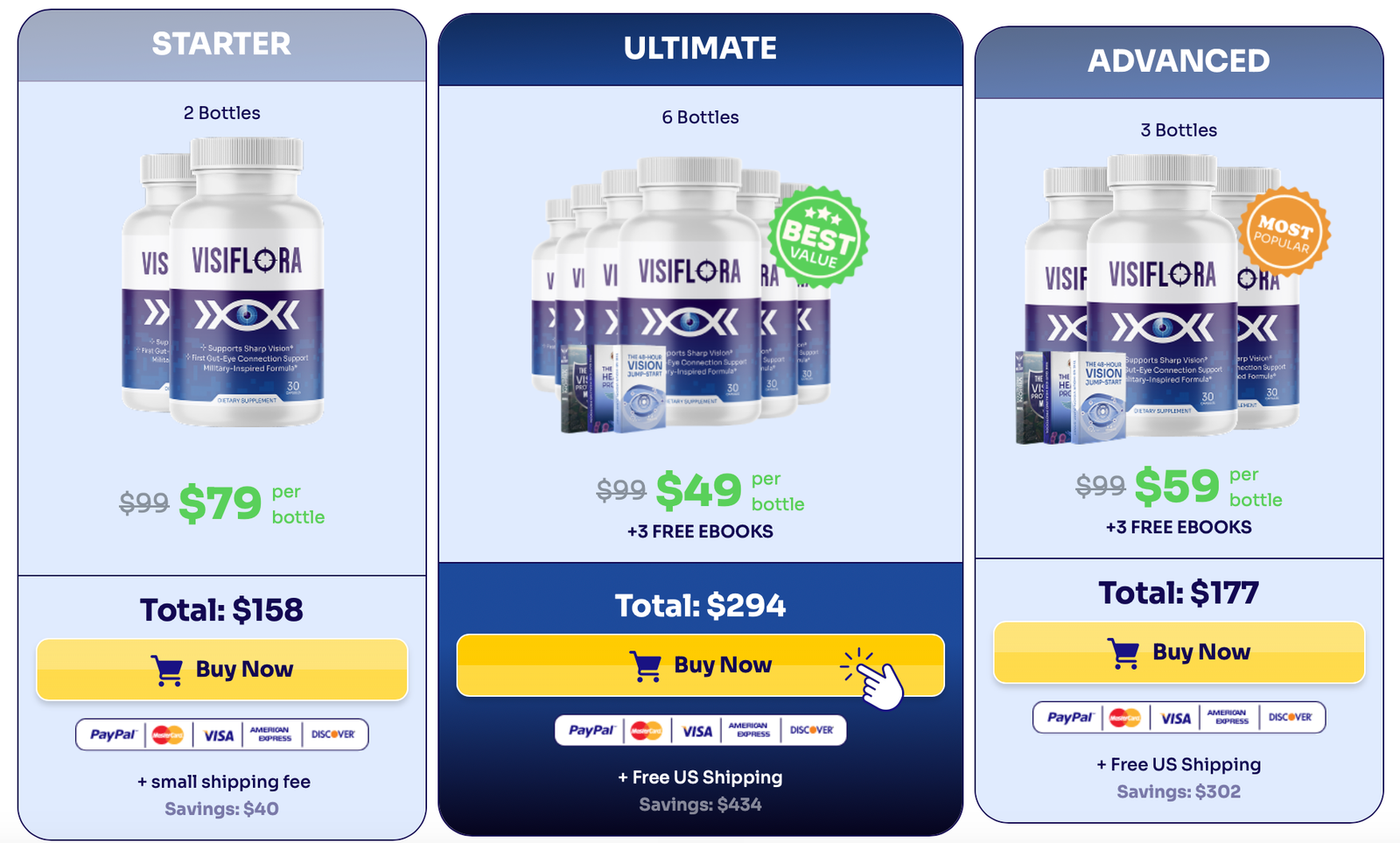
Check the Current Offer Before You Decide
Package prices, shipping and bonuses can change. Confirm current terms on the merchant page.
Published Products
Explore current product reviews and research hubs.


Direct Answer: What Is the Proposed VisiFlora Mechanism?
The product is positioned as a multi-pathway supplement rather than a single-mechanism formula. Its marketing combines conventional nutritional support for eye tissues with antioxidant ingredients and a broader gut-eye narrative involving microbial activity, barrier function, and systemic signaling.
That structure is plausible as a product concept because eye health is influenced by nutrition, oxidative stress, vascular function, aging, metabolic status, and inflammatory signaling. But a plausible mechanism is only the starting point. Buyers should distinguish between a pathway that researchers study and a clinical effect proven for the complete supplement.
Pathway 1: Nutritional Support for Ocular Tissues
Eye-support supplements often include carotenoids and micronutrients because the retina and macula are metabolically active tissues exposed to light and oxidative stress. Nutritional adequacy matters to normal tissue function.
Lutein and zeaxanthin are concentrated in macular pigment, where they absorb high-energy visible light and participate in antioxidant defense. Other vitamins and minerals can support broader enzymatic and cellular functions. When assessing VisiFlora, the important question is whether the current formula provides transparent amounts and whether those amounts are comparable to doses used in relevant human studies.
Pathway 2: Antioxidant and Oxidative-Stress Rationale
Many vision supplements use antioxidant ingredients because oxidative stress is relevant to aging and retinal biology. Antioxidant activity can be measured in many ways, but it does not automatically translate into improved vision or prevention of eye disease.
Botanicals, carotenoids, and certain micronutrients can participate in antioxidant systems. Their practical value depends on bioavailability, dose, nutritional status, and the specific endpoint being studied. A buyer should therefore view antioxidant positioning as one part of the rationale rather than a guarantee of a clinical result.
Pathway 3: The Gut-Eye Axis
The gut-eye axis describes possible communication between the intestinal microbiome and ocular tissues through immune, metabolic, vascular, and barrier-related pathways. Independent ophthalmic reviews discuss this as an emerging systems-biology framework.
Recurring themes include Th17/Treg immune balance, intestinal permeability, circulating microbial products, short-chain fatty acids, bile-acid signaling, and tryptophan-derived metabolites. These pathways are scientifically important because they provide mechanisms by which the gut could influence distant tissues. However, the relative importance of each pathway differs across diseases and populations, and much of the evidence remains associative or preclinical.
For VisiFlora, that means the gut-eye narrative can be discussed as context, but the product should not be assumed to change a particular microbial pathway unless that has been directly measured.
Mechanism Map for Buyers
| Proposed layer | Why it is biologically relevant | Buyer interpretation |
|---|---|---|
| Macular nutrients | Carotenoids and micronutrients support normal ocular nutrition | Verify dose and form |
| Antioxidant support | Oxidative stress is relevant to retinal aging and cellular stress | Do not equate antioxidant activity with disease treatment |
| Gut microbiome signaling | Microbial metabolites and immune signaling can affect systemic physiology | Research area is active but product-specific effects need direct evidence |
| Barrier integrity | Intestinal and vascular barriers influence systemic exposure and tissue homeostasis | Claims about “sealing” barriers require strong evidence |
What Would Strong Product-Level Evidence Look Like?
The strongest evidence would come from well-designed human trials using the finished VisiFlora product, the marketed serving, a clearly defined population, and validated eye or visual endpoints.
Useful studies would predefine outcomes, include an appropriate comparison group, report adverse events, and explain how missing data were handled. If the product claims a microbiome mechanism, stronger evidence would also measure microbiome or metabolite changes rather than infer them from the ingredient list alone.
Until that level of evidence is available, buyers can still evaluate the formula as a nutritional supplement, but they should avoid interpreting mechanistic language as proof of a specific ophthalmic outcome.
Compare the Research With the Current VisiFlora Offer
Review the formula, current package and merchant terms before ordering.
How to Interpret This Research Before Making a Buying Decision
When interpreting how VisiFlora is positioned to work, it helps to move from mechanism to evidence rather than from marketing to conclusion. Separate the merchant’s formula rationale from established nutritional physiology, emerging gut-eye mechanisms and product-level clinical evidence. This keeps plausible biology, ingredient-level research and finished-product evidence in separate categories.
Microbiome and nutrition studies are especially sensitive to context. Diet, age, medication use, geography, metabolic health, sequencing methods and baseline microbial composition can all affect results. A finding in one population may therefore be useful for hypothesis generation without being directly transferable to every consumer or to a multi-ingredient supplement.
For VisiFlora, the practical task is to compare the verified label and merchant information with the scope of the independent research. Where evidence addresses an individual nutrient or biological pathway, the page should say so. Where research addresses a disease population, a different dose or another formulation, those differences should remain visible rather than being collapsed into a single product claim.
Evidence questions to ask
- Was the evidence obtained in humans, animals, laboratory models or observational datasets?
- Does it study the finished VisiFlora formula, a single ingredient, a dietary pattern or only a proposed biological pathway?
- Are dose, formulation, population and measured endpoint comparable with the buying question on this page?
- Are findings replicated by independent groups, or are they exploratory and dependent on one dataset?
Buyer questions to ask
- Does the current label clearly identify the ingredients and directions needed to evaluate fit?
- Are merchant facts such as package size, shipping and refund terms current at checkout?
- Could medicines, allergies, pregnancy, a diagnosed eye condition or other health factors change the safety decision?
- Would a qualified eye-care or medical professional be more appropriate for the underlying concern?
Continue the VisiFlora Research Series
Research Sources
Ready to Review the Current VisiFlora Offer?
Confirm the current label, package, shipping and guarantee directly with the merchant.