Weight Loss Supplements: What 111 Randomized Trials and Major Reviews Actually Show
Weight-loss supplements span fibers, botanicals, stimulants and multi-ingredient formulas. The evidence is mixed, effects are often small, and product-level claims require more than ingredient association.
- 111 randomized trials provide a useful comparative evidence map
- Small average effects should not be presented as guaranteed personal results
- Safety and interaction profiles differ sharply by ingredient
- Lifestyle and medical care remain the foundation of weight management
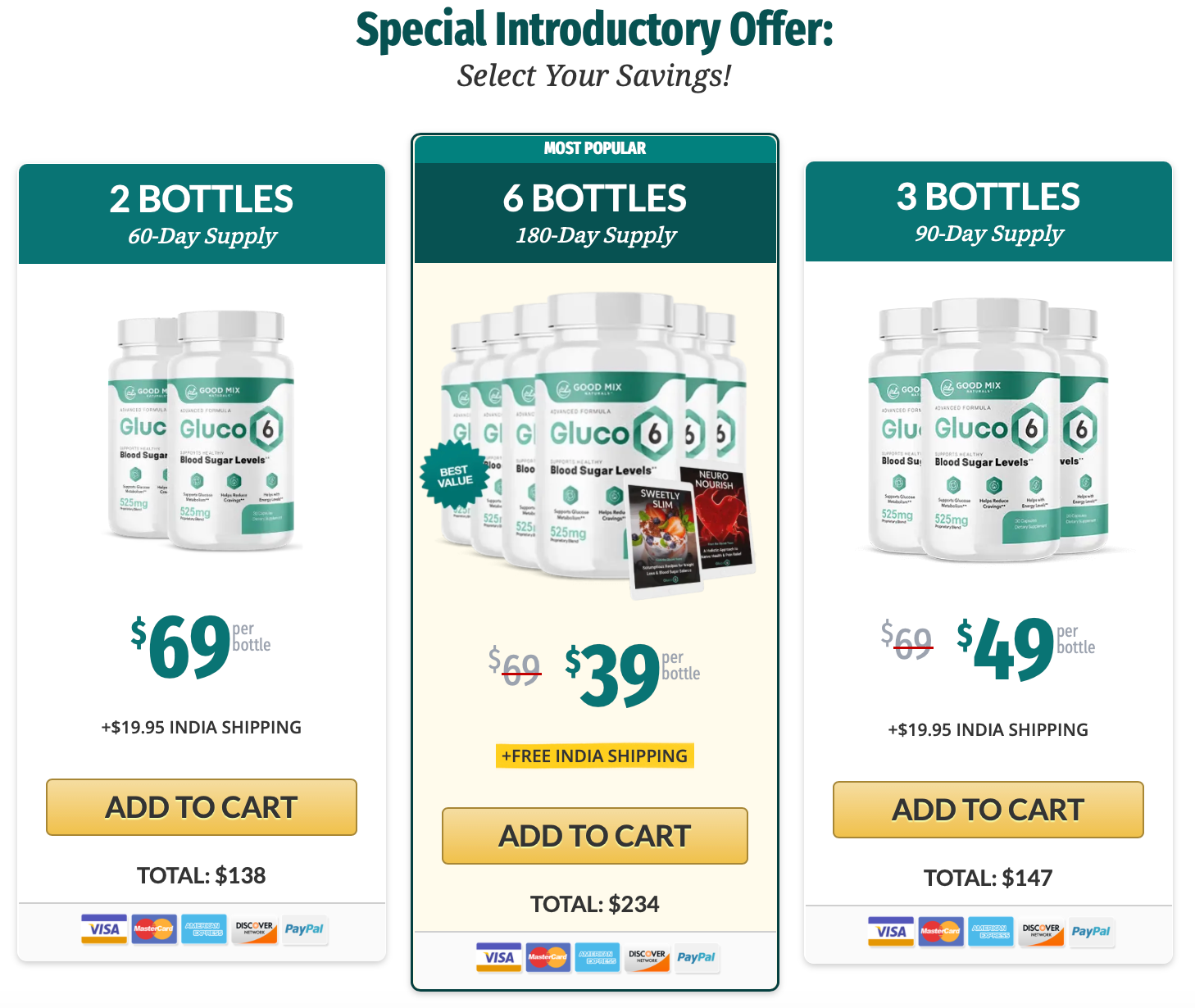
See the current Gluco6 offer before reading the deeper research
Commercial terms can change. Check the current merchant page for package, shipping, bonus and refund details.




What the 111-trial network meta-analysis found
The 2023 network meta-analysis included 111 randomized trials with 6,171 participants and evaluated 18 nutraceuticals for body-weight outcomes in adults with overweight or obesity.
The authors reported small average weight changes for several nutraceuticals, with higher certainty for some ingredients and lower certainty for others. Spirulina had high-certainty evidence for a small average reduction; curcumin, psyllium, chitosan and Nigella sativa had moderate-certainty evidence for small changes; green tea and glucomannan showed small reductions but with low certainty.
These findings are useful because they show two things at once: supplements are not all equivalent, and statistically significant change does not automatically mean a large or clinically important effect. The study does not establish that commercial products containing these ingredients will produce the same outcomes.
Why “best weight loss supplement” is a difficult question
A ranking based only on average kilograms lost can be misleading because evidence certainty, safety, adherence, population and product formulation differ.
Network meta-analysis can compare interventions across a research network, but real-world product decisions require more context. An ingredient with a larger estimated effect may have weaker evidence, more side effects, less consistent dosing or poor relevance to a particular user. Conversely, an ingredient with a modest effect may have better characterized safety.
A useful buyer guide therefore combines effect size, certainty, dose, trial duration, adverse effects and practical fit.
Thermogenic, satiety and absorption mechanisms
Weight-management supplements are often grouped into thermogenic, appetite/satiety, fat-absorption or other metabolic mechanisms.
The 2011 fat-burner review describes products marketed to increase energy expenditure, increase fat oxidation, impair fat absorption or promote longer-term metabolic adaptations. The 2022 safety/metabolic-health review covers caffeine and green tea for thermogenesis, glucomannan for satiety, and other ingredients representing different mechanisms.
Mechanisms help organize the category, but a plausible mechanism is not enough. Human trials and safety data determine how much confidence should be placed in the claim.
Compare the research with the current Gluco6 formula
Use the product-specific review to see which ingredients are actually in the current formula and how the evidence boundaries apply.
What NIH says about common ingredients
NIH ODS summarizes a wide range of weight-loss supplement ingredients and repeatedly finds that evidence is limited, inconsistent or associated with only modest effects.
For green tea, NIH notes a possible modest effect on body weight and also highlights safety concerns for concentrated extracts, including liver-related adverse events. For glucomannan, weight-loss findings are inconsistent and gastrointestinal adverse effects can occur. Caffeine can increase thermogenesis, but tolerance develops and stimulant effects matter.
These examples reinforce a central rule: the marketing category “weight loss supplement” is too broad to support one blanket conclusion.
How Gluco6 relates to weight-management search intent
Gluco6 contains green tea and is marketed with broader metabolic and body-composition themes, which makes it relevant to some weight-management research questions.
However, the supplied evidence does not justify presenting Gluco6 as a clinically established weight-loss treatment. Green-tea evidence can inform ingredient context, and merchant materials can establish current product positioning, but the finished Gluco6 formula requires its own evidence review. The correct user journey is from category evidence to product-specific ingredients and clinical-evidence analysis.
A safer decision framework
Weight-management supplements should be evaluated as optional adjuncts rather than replacements for established lifestyle or medical care.
Consider the magnitude and certainty of evidence, the presence of stimulants, gastrointestinal or liver-related risks, potential medication interactions, and whether the product makes claims stronger than its supporting research. People with diagnosed obesity-related conditions or those considering prescription therapy should use supplement content as education, not as a substitute for individualized clinical care.
How to interpret “small weight loss” in supplement research
Weight-management studies often report average changes over weeks or months, but averages can hide wide individual variation. A mean difference of roughly one or two kilograms can be statistically significant while still being modest relative to total body weight, and it does not predict what any one person will experience. Trial participants may also receive diet or lifestyle guidance that is not captured by the supplement label itself.
Certainty ratings are therefore as important as the estimated effect. High-certainty evidence means researchers have more confidence that the estimated direction and magnitude are reasonably stable; low-certainty evidence means future studies could materially change the conclusion. The 111-trial network meta-analysis is useful because it reports both effect estimates and evidence certainty instead of presenting every positive signal as equally reliable.
Consumers should also check whether a commercial product uses the same ingredient, dose and preparation studied in the evidence. If not, the research may still provide context, but it cannot establish that the finished product will reproduce the reported result. This is especially important for blends that combine multiple low-dose ingredients behind a stronger headline claim.
What buyers should verify before paying for a weight-loss supplement
A buyer should verify more than the headline promise. The most useful pre-purchase questions concern the exact formula, dose, evidence magnitude, evidence certainty, stimulant exposure, interaction risk and whether the commercial claims are stronger than the underlying research.
For products that cite green tea, caffeine, glucomannan or other researched ingredients, compare the label with the studied preparation and dose. Look for realistic language about expected effects rather than dramatic before-and-after promises. Check whether the seller discloses current pricing, recurring billing if any, shipping and refund terms. A transparent product can still have modest evidence, but transparency makes that modest evidence easier to evaluate honestly.
The 111-trial analysis is especially helpful because it shows that some nutraceuticals have evidence for small average changes, not dramatic guaranteed loss. A buyer who understands that scale is less likely to interpret a statistically significant finding as proof of a large personal result.
How to use this research without over-reading it
Research is most useful when it narrows uncertainty rather than pretending to remove it.
For supplement decisions, the strongest workflow is to identify the exact user goal, find the human evidence that measures that same outcome, check whether the studied ingredient and dose resemble the commercial formula, then review safety and current merchant information. This sequence avoids a common error in affiliate content: starting with a product claim and searching backward for any study that sounds related.
Evidence also changes over time. New trials, reformulations, updated safety information and revised merchant terms can alter the practical conclusion even when the page URL remains the same. That is why this guide treats research evidence as periodically reviewable and commercial facts as faster-changing. Before purchase, users should verify the current label and checkout terms rather than relying on an old screenshot or third-party summary.
Finally, the absence of strong evidence is not proof that an ingredient has no effect, just as the presence of one positive study is not proof that a finished product works. The most defensible conclusion is the one that matches the quality, population, dose, duration and endpoint of the available evidence.
Continue through the evidence and product decision path
Finished the research? Review the current Gluco6 offer
Confirm the current formula and merchant terms before making a purchase decision.
Research sources and evidence notes
- Shahinfar H, et al. Comparative effects of nutraceuticals on body weight in adults with overweight or obesity: systematic review and network meta-analysis of 111 randomized clinical trials. Pharmacological Research. 2023.
- Mah E, Chen O, Liska DJ, Blumberg JB. Dietary Supplements for Weight Management: A Narrative Review of Safety and Metabolic Health Benefits. Nutrients. 2022.
- Jeukendrup AE, Randell R. Fat burners: nutrition supplements that increase fat metabolism. Obesity Reviews. 2011.
- NIH Office of Dietary Supplements. Dietary Supplements for Weight Loss: Health Professional Fact Sheet.
- NCCIH. Diabetes and Dietary Supplements: What You Need To Know.